
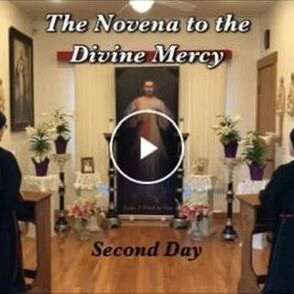
 On Good Friday the Novena of Chaplets prior to Divine Mercy Sunday begins. There are videos and audio files available so you can pray along with the sisters. Jesus promises St. Faustina in the diary, “by this novena, I will grant every possible grace to souls."(Diary 796) It is a perfect time to place all our confidence in Him.
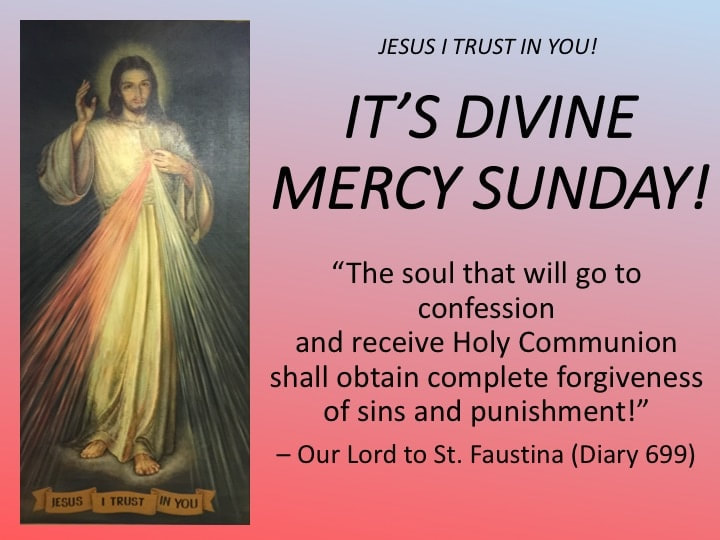
Soon it will be Divine Mercy Sunday, the Sunday the sisters wait for all year long. Jesus tells St. Faustina, “On that day the very depths of My tender mercy are open. I pour out a whole ocean of graces upon those souls who approach the fount of My mercy. The soul that will go to Confession and receive Holy Communion shall obtain complete forgiveness of sins and punishment.”(Diary 699) Click to learn more about the Feast. 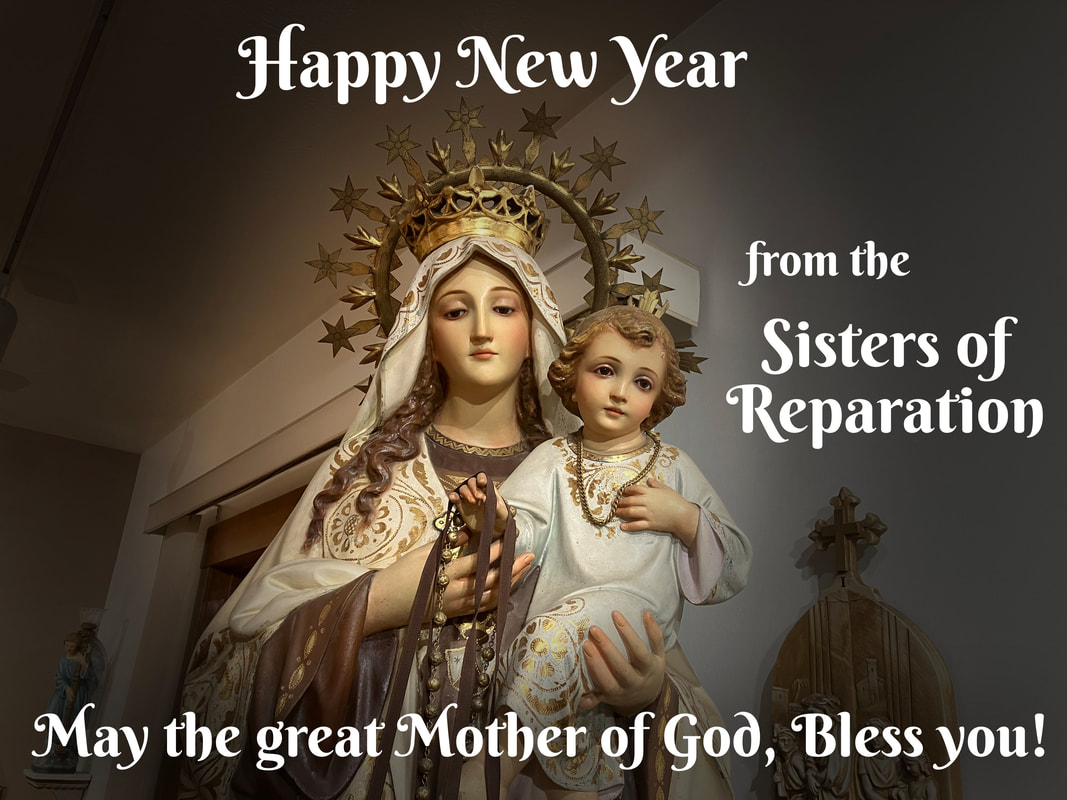 May Mary, the Mother of God, be always at your side this New Year.
Padre Pio recited this novena every day for all those who requested his prayers.
I. O my Jesus, you have said: "Truly I say to you, ask and it will be given you, seek and you will find, knock and it will be opened to you." Behold I knock, I seek and ask for the grace of... Our Father... Hail Mary... Glory Be to the Father... Sacred Heart of Jesus, I place all my trust in you. II. O my Jesus, you have said: "Truly I say to you, if you ask anything of the Father in my name, He will give it to you." Behold, in your name, I ask the Father for the grace of... Our Father... Hail Mary... Glory Be To the Father... Sacred Heart of Jesus, I place all my trust in you. III. O my Jesus, you have said: "Truly I say to you, heaven and earth will pass away but my words will not pass away." Encouraged by your infallible words I now ask for the grace of... Our Father... Hail Mary... Glory Be to the Father... Sacred Heart of Jesus, I place all my trust in you. O Sacred Heart of Jesus, for whom it is impossible not to have compassion on the afflicted, have pity on us miserable sinners and grant us the grace which we ask of you, through the Sorrowful and Immaculate Heart of Mary, your tender Mother and ours. Say the Hail, Holy Queen and add: St. Joseph, foster father of Jesus, pray for us. |
SISTERS OF REPARATION"Whatsoever you do, do it from the heart, as to the Lord, and not to men: Knowing that you shall receive of the Lord the reward of inheritance. Serve ye the Lord Christ" Colossians 3:23-24. Categories
All
Archives
April 2024
|



 RSS Feed

Sisters of Reparation, P.O. Box 9, Steubenville, OH 43952 (740) 282-2144
Sisters of Reparation to the Most Sacred Heart of Jesus Copyright © 2012-2024 All Rights Reserved